


LEDs – The Power Behind Your Screen
Modern televisions rely on LED backlighting to produce the bright, vibrant images you see on the screen. Even though many TVs are marketed as “LED TVs,” the truth is that most of them are actually LCD televisions illuminated by LED lights behind the panel.
These LEDs serve as the television’s light source, shining through the LCD panel to create the picture you see.
Without these LEDs working properly, your TV may still turn on, but the screen may appear:
- Completely black
- Very dim
- Flash briefly and turn dark
- Show bright spots or uneven lighting
- Have sound but no picture
These symptoms are some of the most common TV repair issues we see in the Tampa Bay area.
How LED Backlighting Works
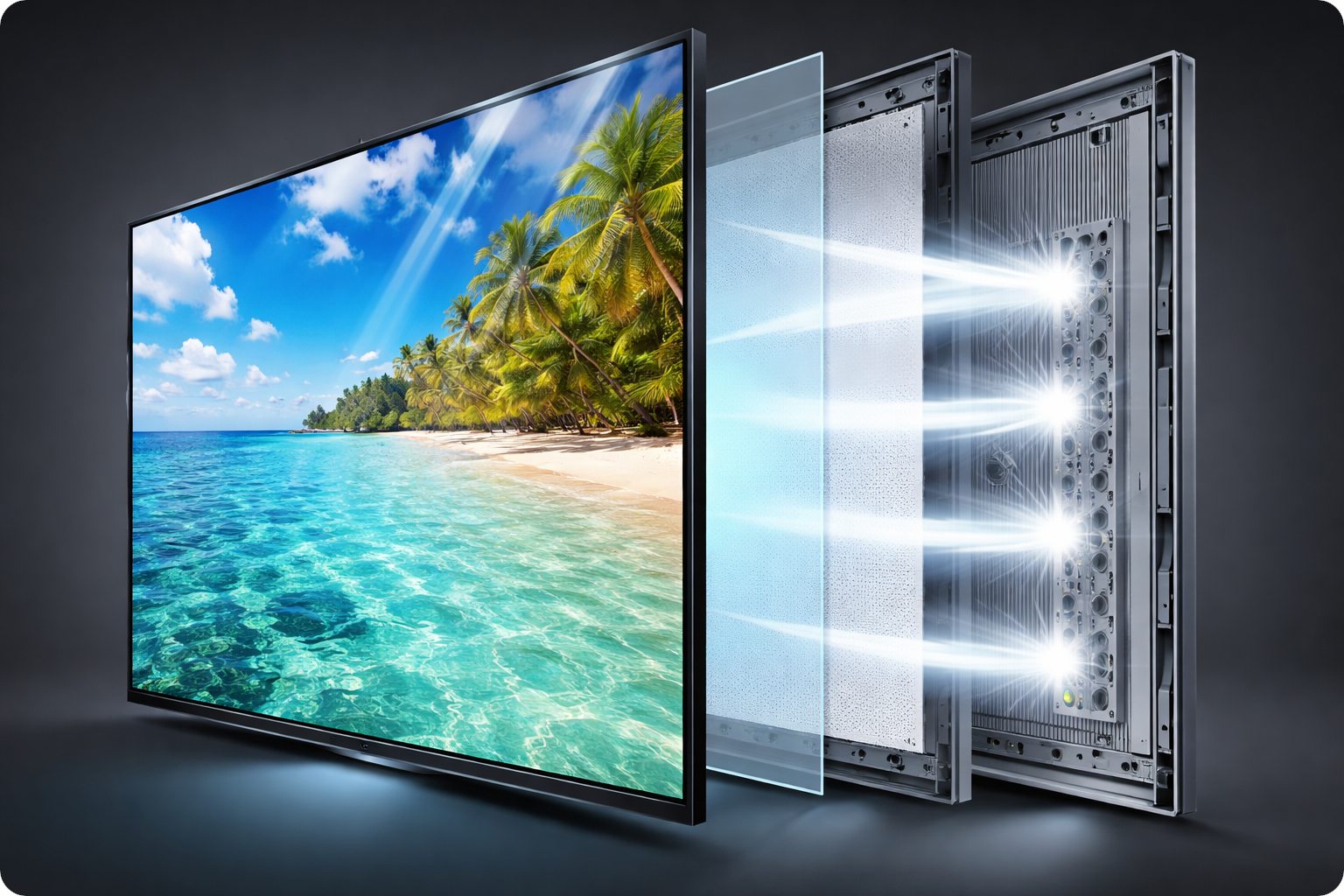 Inside your television, multiple LED strips are placed behind the screen. Each strip contains a series of high-brightness LEDs that illuminate the LCD panel.
Not all TVs use LEDs. Learn more about TV Technologies Here.
The LCD panel itself does not create light. Instead, it works like a series of tiny shutters, controlling how much light from the LEDs passes through each pixel.
This combination allows modern TVs to produce:
- High brightness
- Low power consumption
- Thin screen designs
- Improved picture contrast
Why LED Backlights Fail
LED backlights operate at high brightness levels and high temperatures for thousands of hours. Over time, this can cause several types of failures:
Common LED failures we repair
LED burnout – One or more LEDs stop producing light entirely.
Lens failure – The plastic lenses that distribute light can fall off, creating bright spots on the screen.
Color shifting – Aging LEDs can change color, often producing a blue or purple tint.
Driver board issues – The power supply that drives the LEDs can also fail, causing the screen to flicker or go dark.
In many televisions, one failed LED can cause the entire backlight system to shut down to prevent further damage.
Signs Your TV May Have LED Backlight Failure
Your television may need LED repair if you notice:
- TV turns on, but the screen is black
- The picture appears briefly, then disappears
- Bright white spots on the screen
- Uneven lighting or dark areas
- The screen looks very dim, even at full brightness
These problems are especially common in TVs that are 3–8 years old.
Why Some TVs Experience More LED Failures
Several design factors influence how long LED backlights last.
Brightness Settings
Many TVs ship from the factory with maximum brightness enabled to make the display stand out in retail stores. Running LEDs at maximum brightness can significantly reduce their lifespan.
Reducing backlight brightness to 70–80% can often extend LED life.
Cooling and Heat Management
LEDs generate heat. If a TV has poor ventilation or a compact panel design, heat buildup can weaken the LED phosphor layer, leading to early failures.
This is why ultra-thin TVs sometimes experience LED failures sooner.
LED Driver Current
The LED driver circuit controls how much current flows through the LEDs.
Some manufacturers run LEDs very close to their maximum rating to achieve higher brightness. While this improves picture brightness, it can shorten the LEDs’ lifespan.
LED Backlight Failure Statistics by TV Brand
Real-World LED Backlight Reliability
While manufacturers rarely publish reliability data, television repair technicians see clear patterns in which brands and models experience LED backlight failures most often.
Based on common repair trends observed in the TV repair industry, LED backlight failures typically occur after 3–7 years of regular use, depending on panel design, brightness settings, and cooling efficiency.
Below is a general reliability overview based on common service patterns.
| TV Brand | Typical LED Failure Age | Common Symptoms | Repair Frequency |
|---|---|---|---|
| Samsung | 4-7 years | Dim screen, backlight shuts off | Medium |
| LG | 5-8 years | Bright spots, uneven lighting | Medium |
| Vizio | 3-5 years | Screen goes black but sound works | High |
| TCL | 3-5 years | Backlights shut down | High |
| Hisense | 3-5 years | Flickering or dim display | Medium |
| Sony | 6-9 years | Gradual dimming | Low |
Note: These figures represent common repair observations and may vary by model and usage.
Ask us how you can extend the life of your television’s LEDs!
Professional LED Backlight Repair
Replacing LED backlights requires completely disassembling the television panel, which is one of the most delicate parts of the repair process.
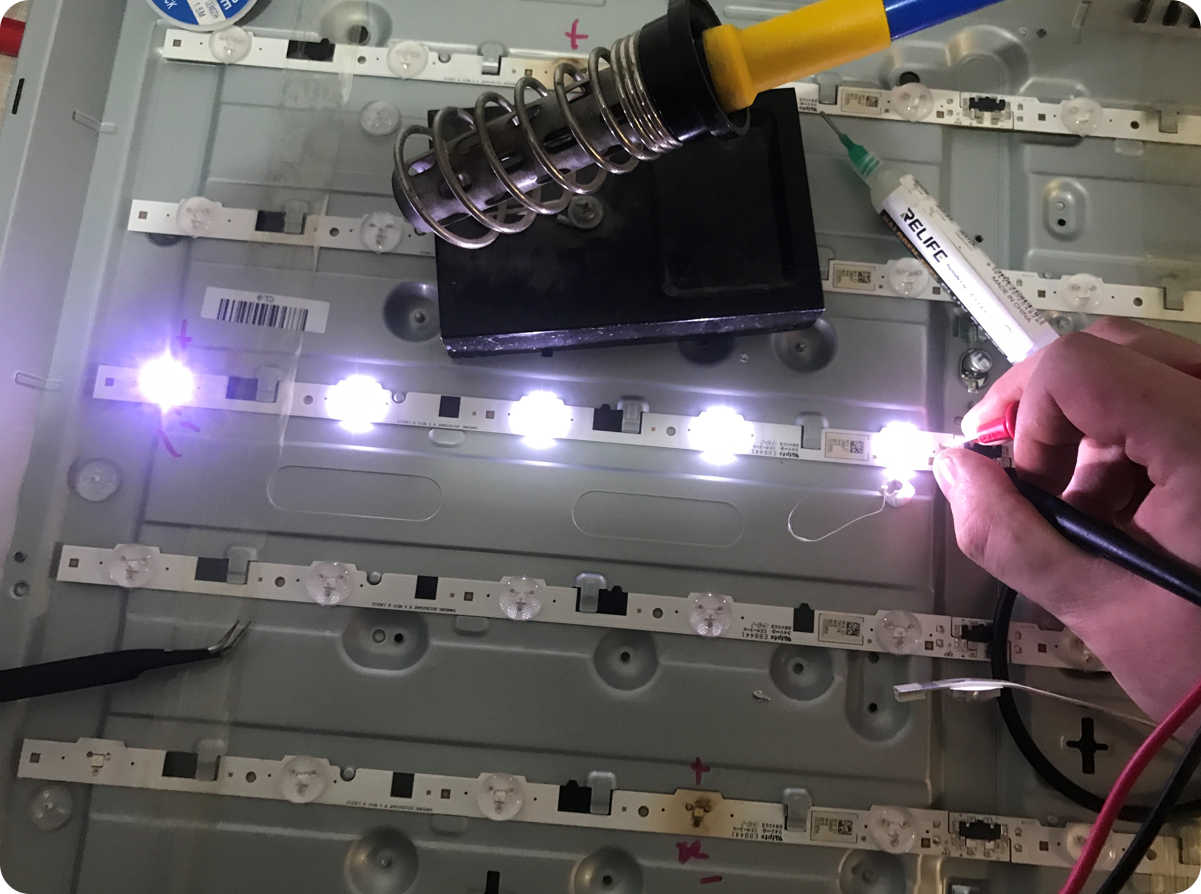 Our technicians:
- Safely remove the LCD panel
- Inspect the LED strips
- Replace defective LEDs or entire LED arrays
- Reassemble and test the television
At 1st Response Electronics, we repair LED backlight problems in your home whenever possible, saving customers in Tampa Bay the cost of replacing their television. Contact Us to get your television fixed!
